
|
Synecdoche (sih-NECK-duh-kee): Figure of comparison in which a word standing for part of something is used for the whole of that thing or vice versa; any part or portion or quality of a thing used to stand for the whole of the thing or vice versa -- genus to species or species to genus. |
|
| Further Examples | |
|
"Good evening. Elvis Presley died today. He was 42. Apparently, it was a heart attack. He was found in his home in Memphis not breathing. His road manager tried to revive him -- he failed. A hospital tried to revive him -- it failed. His doctor pronounced him dead at three o'clock this afternoon. -- NBC Nightly News with John Chancellor and David Brinkley Note: In this case, the whole (hospital) stands in for one of its parts (the attending physician and health care workers). |
|
|
"Give us this day our
daily bread."
-- Matthew 6:11 (KJV), delivered by Max McLean Note: In this case, the part (bread) stands in for the whole (food and perhaps other necessities of life) |
|
|
"And I began a little quiet campaign of persuasion with certain editors, seeking to show the unlimited possibilities for education and amusement. One would have thought that we would find willing ears on the part of the newspapers." -- Lee De Forest Note: Two instances of synecdoche. The first uses a part (willing ears) to stand for the whole (persons in charge of making the decisions). The second uses a part (newspapers) to stand for the whole (newspaper companies). |
|
|
"I am running for President in that Texas primary. And those kids are going to see me do that. And that's the only statement about my skin color I intend to make in this campaign." -- delivered by Jimmy Smits and Bradley Whitford (from the TV series The West Wing, Season 5, Ep. 18 Note: One Individual's skin color representing an entire race or class of persons. |
|
|
"This instrument [TV] can teach; it can illuminate; yes, and even it can inspire. But it can do so only to the extent that humans are determined to use it to those ends. Otherwise it's nothing but wires and lights in a box." -- Edward R. Murrow, RTNDA After-Dinner Address Note: Even if commercial television programming failed to live up to the lofty, if gravely idealistic, standards Mr. Murrow desired for it, the television set (itself) of the late 50s and early 60s was something of an engineering marvel, featuring considerably more technical components and features than merely 'wires and lights in a box.' |
|
|
© Copyright 2001-Present. |
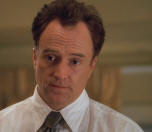 Josh Lyman: "We're
not going to win the nomination. You should remember who your friends
are -- not some names on an index card, but the people you're going back
to. And then you should take a bow, and you should step off the stage.
Josh Lyman: "We're
not going to win the nomination. You should remember who your friends
are -- not some names on an index card, but the people you're going back
to. And then you should take a bow, and you should step off the stage.
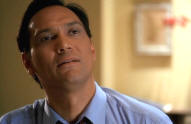 Matt Santos:
"Hmm. You know, when I got out of the Marines, I hadn't been around my
old neighborhood in Houston in a few years. I had just gotten this job
offer from the Pentagon, and it required a full FBI background check.
After a few weeks, the investigators -- they came up to me and they said,
"We can't give you the job. We've interviewed all your old friends and
neighbors, and they can't confirm anything -- not even your name. So I
hop a plane, go back to the old block. I see my neighbor's, 11 and 13-
year-old kids. They're -- They're sitting on the
Matt Santos:
"Hmm. You know, when I got out of the Marines, I hadn't been around my
old neighborhood in Houston in a few years. I had just gotten this job
offer from the Pentagon, and it required a full FBI background check.
After a few weeks, the investigators -- they came up to me and they said,
"We can't give you the job. We've interviewed all your old friends and
neighbors, and they can't confirm anything -- not even your name. So I
hop a plane, go back to the old block. I see my neighbor's, 11 and 13-
year-old kids. They're -- They're sitting on the