
|
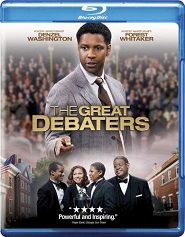
American Rhetoric: Movie Speech "The Great Debaters" (2007)
Wiley College vs. Harvard University Resolved: Civil Disobedience is a Moral Weapon in the Fight for Justice
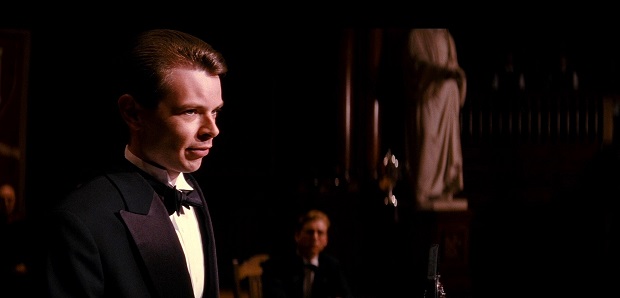
Harvard Dean: On this historic occasion, we welcome the distinguished team from Wiley College, our illustrious judges, you, the audience, and through the wonder of radio, the nation. Harvard University celebrates its 300th anniversary this year, and in Franklin Delano Roosevelt, its fifth President of the United States. But no university, no matter how grand or Augustan its history, can afford to live in the past. So, in the spirit of tomorrow, I introduce to you, today, the debaters from Wiley College: Samantha Booke and Mr. James Farmer, Jr. Mr. Farmer will argue the first affirmative.
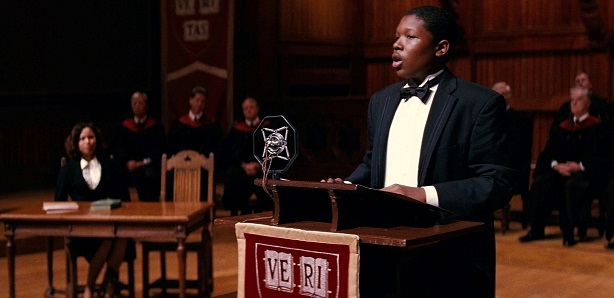
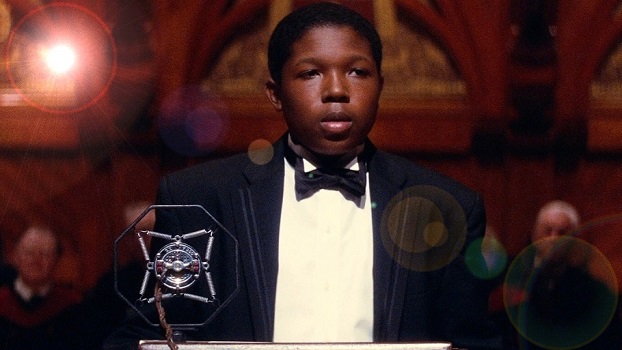
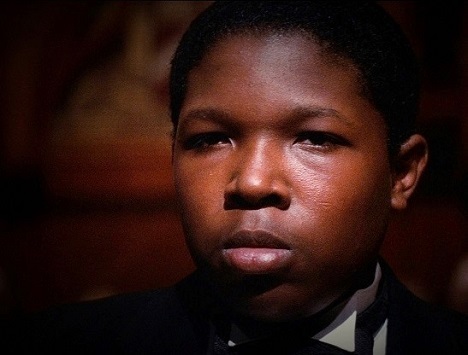
James Farmer, Jr: Resolved: Civil disobedience is a moral weapon in the fight for justice. But how can disobedience ever be moral? Well I guess that depends on one's definition of the words -- word. In 1919, in India, ten thousand people gathered in Amritsar to protest the tyranny of British rule. General Reginald Dyer trapped them in a courtyard and ordered his troops to fire into the crowd for ten minutes. Three hundred seventy-nine died -- men, women, children, shot down in cold blood. Dyer said he had taught them "a moral lesson." Gandhi and his followers responded not with violence, but with an organized campaign of noncooperation. Government buildings were occupied. Streets were blocked with people who refused to rise, even when beaten by police. Gandhi was arrested. But the British were soon forced to release him. He called it a "moral victory." The definition of moral: Dyer's "lesson" or Gandhi's victory. You choose.
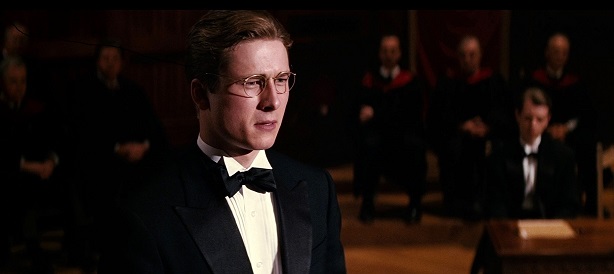
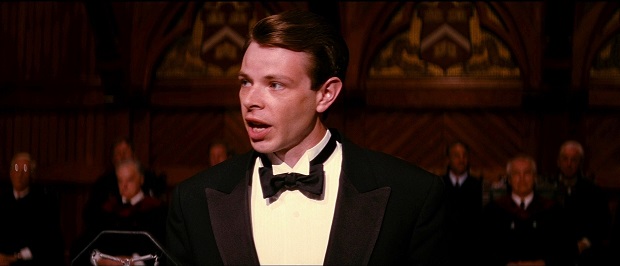
First Harvard Debater: From 1914 to 1918, for every single minute the world was at war, four men laid down their lives. Just think of it: Two hundred and forty brave young men were hurled into eternity every hour, of every day, of every night, for four long years. Thirty-five thousand hours; eight million, two hundred and eighty-one thousand casualties. Two hundred and forty. Two hundred and forty. Two hundred and forty. Here was a slaughter immeasurably greater than what happened at Amritsar. Can there be anything moral about it? Nothing -- except that it stopped Germany from enslaving all of Europe. Civil disobedience isn't moral because it's nonviolent. Fighting for your country with violence can be deeply moral, demanding the greatest sacrifice of all: life itself. Nonviolence is the mask civil disobedience wears to conceal its true face: anarchy.
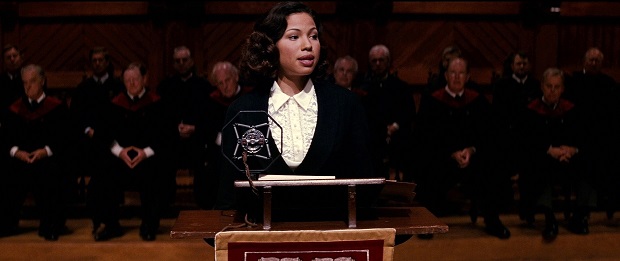
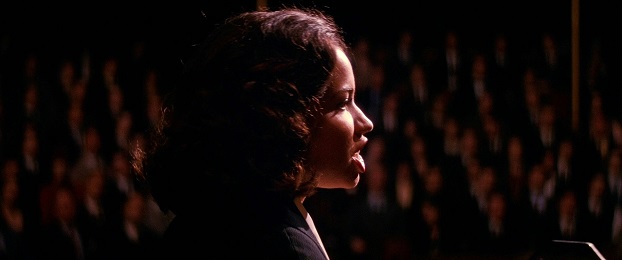
Samantha Booke: Gandhi believes one must always act with love and respect for one's opponents -- even if they are Harvard debaters. Gandhi also believes that law breakers must accept the legal consequences for their actions. Does that sound like anarchy? Civil disobedience is not something for us to fear. It is, after all, an American concept. You see, Gandhi draws his inspiration not from a Hindu scripture, but from Henry David Thoreau, who, I believe, graduated from Harvard and lived by a pond not too far from here.
Second Harvard Debater: My opponent is right about one thing: Thoreau was a Harvard grad; and, like many of us, a bit self-righteous. He once said, "Any man more right than his neighbors constitutes a majority of one...."¹ Thoreau the idealist could never know that Adolf Hitler would agree with his words. The beauty and the burden of democracy is this: No idea prevails without the support of the majority. The People decide the moral issues of the day, not "a majority of one."
Samantha Booke: Majorities do not decide what is right or wrong. Your conscience does. So why should a citizen surrender his or her conscience to a legislature? For we must never, ever kneel down before the tyranny of a majority.
Second Harvard Debater: You can't decide which laws to obey and which to ignore. If we could, I'd never stop for a red light. My father is one of those men that [sic] stands between us and chaos: a police officer. I remember the day his partner, his best friend, was gunned down in the line of duty. Most vividly of all, I remember the expression on my dad's face. Nothing that erodes the rule of law can be moral, no matter what name we give it.
James Farmer, Jr: In Texas, they lynch negroes. My teammates and I saw a man strung up by his neck -- and set on fire. We drove through a lynch mob, pressed our faces against the floorboard. I looked at my teammates. I saw the fear in their eyes; and worse -- the shame. What was this negro's crime that he should be hung, without trial, in a dark forest filled with fog? Was he a thief? Was he a killer? Or just a negro? Was he a sharecropper? A preacher? Were his children waiting up for him? And who were we to just lie there and do nothing? No matter what he did, the mob was the criminal. But the law did nothing -- just left us wondering why. My opponent says, "Nothing that erodes the rule of law can be moral." But there is no rule of law in the Jim Crow South, not when negroes are denied housing, turned away from schools, hospitals -- and not when we are lynched.
|

|
© Copyright 2001-Present. |